Summary
Stigma is an illuminating excursion into the situation of persons who are unable to conform to standards that society calls normal. Disqualified from full social acceptance, they are stigmatized individuals. Physically deformed people, exmental patients, drug addicts, prostitutes, or those ostracized for other reasons must constantly strive to adjust to their precarious social identities. Their image of themselves must daily confront and be affronted by the image which others reflect back to them.
Drawing extensively on autobiographies and case studies, sociologist Erving Goffman analyzes the stigmatized person’s feelings about himself and his relationship to “normals.” He explores the variety of strategies stigmatized individuals employ to deal with the rejection of others, and the complex sorts of information about themselves they project. In Stigma the interplay of alternatives the stigmatized individual must face every day is brilliantly examined by one of America’s leading social analysts.
Contents
- Stigma and Social Identity
- Preliminary Conceptions
- The Own and the Wise
- Moral Career
- Information Control and Personal
- Identity
- The Discredited and the Discreditable
- Social Information
- Visibility
- Personal Identity
- Biography
- Biographical Others
- Passing
- Techniques of Information Control
- Covering
- Group Alignment and Ego Identity
- Ambivalence
- Professional Presentations
- In-Group Alignments
- Out-Group Alignments
- The Politics of Identity
- The Self and Its Other
- Deviations and Norms
- The Normal Deviant
- Stigma and Reality
- Deviations and Deviance
Extract
For over a decade now in the literature of social psychology there has been good work done on stigma—the situation of the individual who is disqualified from full social acceptance. This work has been added to from time to time by useful clinical studies, and its framework applied to ever new categories of persons.
In this essay I want to review some work on stigma, especially some popular work, to see what it can yield for sociology. An exercise will be undertaken in marking off the material on stigma from neighboring facts, in showing how this material can be economically described within a single conceptual scheme, and in clarifying the relation of stigma to the subject matter of deviance. This task will allow me to formulate and use a special set of concepts, those that bear on "social information," the information the individual directly conveys about himself.
Autor
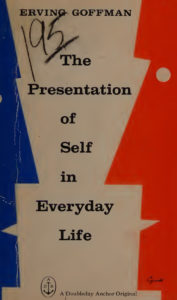
Erving Goffman (1922–1982) was a Canadian sociologist and a leading figure in symbolic interactionism. He is best known for The Presentation of Self in Everyday Life (1956), Asylums (1961), and Stigma (1963). Goffman analyzed everyday interactions as performances, showing how individuals manage impressions and construct social identities in face-to-face situations.
Book Details
| Title |
Stigma |
| Subtitle |
Notes on the Management of Spoiled Identity |
| Autor |
Erving Goffman |
| Publisher |
A Touchstone Book |
| Year |
1986 |
| Pages | 147 |
| Country | United States of America |
| ISBN |
0671622447 |
| Availability |
View on Amazon
|