The Metropolis and Mental Life by Georg Simmel examines how modern urban life profoundly shapes individual psychology, social relations, and culture.
| Publisher | Free Press |
|---|---|
| ISBN | none |
| Year | 1950 |
| Pages | 12 |
| Format |
In this book Georg Simmel argues that the metropolis confronts individuals with an unprecedented intensity and rapid succession of sensory stimuli. To cope with this overload, people develop a rational, intellectual attitude that prioritizes calculation and objectivity over emotional response. This adaptation produces what Simmel calls the blasé attitude: a state of indifference in which differences between things and experiences lose their significance.
The author links this psychological condition to the dominance of the money economy in urban settings. Monetary exchange encourages precision, efficiency, and impersonality, transforming social relationships into functional and transactional interactions. While this weakens intimate bonds and can generate feelings of isolation, it also grants individuals a degree of personal freedom unknown in smaller, more traditional communities. Urban dwellers are less constrained by inherited roles and social expectations, allowing greater experimentation with identity.
Simmel emphasizes a central paradox of metropolitan life: it simultaneously threatens and promotes individuality. On one hand, standardization and mass culture tend to level differences, making people appear interchangeable. On the other hand, the competitive and diverse environment of the city pushes individuals to distinguish themselves through unique styles, intellectual pursuits, and creative expressions.
Ultimately, Simmel presents the metropolis as a defining space of modernity, where tensions between freedom and alienation, autonomy and conformity, are most visible. Understanding these dynamics, he suggests, is essential for grasping the broader cultural and psychological conditions of modern society.
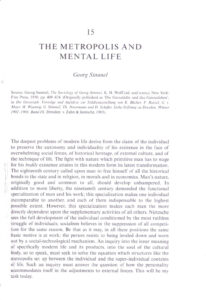
The deepest problems of modern life derive from the individual’s claim to preserve the autonomy and individuality of his existence in the face of overwhelming social forces, historical heritage, external culture, and the techniques of life.
The struggle with nature that primitive man wages for his bodily existence reaches, in modern society, its latest transformation. The eighteenth century called upon humanity to free itself from all historical bonds in the state, religion, morals, and economics. Human nature, originally good and common to all, was expected to develop without hindrance.
Beyond greater liberty, the nineteenth century demanded the functional specialization of individuals and their work. This specialization makes each person incomparable to another and renders every individual indispensable to the highest possible degree. At the same time, however, specialization makes each person more directly dependent upon the supplementary activities of others.
Nietzsche sees the full development of the individual as conditioned by the most ruthless struggle among individuals, while socialism believes in the suppression of all competition for the same fundamental reason.
Be that as it may, in all these positions the same basic motive is at work: the individual resists being leveled down and worn out by a social-technological mechanism.
An inquiry into the inner meaning of specifically modern life and its products—into the soul of the cultural body, so to speak—must seek to solve the equation established by structures such as the metropolis between the individual and the supra-individual contents of life.
Such an inquiry must answer the question of how personality accommodates itself to the pressures of external forces. This will be my task today.
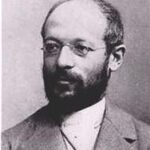
Georg Simmel (1858–1918) was a German philosopher and sociologist whose work played a foundational role in the development of modern sociology and social theory. Born in Berlin, Simmel studied philosophy and history at the University of Berlin, where he later became a lecturer. Although he never held a full professorship for most of his career due to academic and institutional barriers, his influence extended widely through his lectures, essays, and books, which attracted students and intellectuals from across Europe.
Simmel is best known for his analyses of social interaction, culture, and modernity. Rather than focusing solely on large social structures, he examined the forms and patterns through which individuals relate to one another in everyday life. His writings explored topics such as money, fashion, urban life, secrecy, conflict, and individuality, emphasizing how modern society both enables personal freedom and generates new forms of alienation.
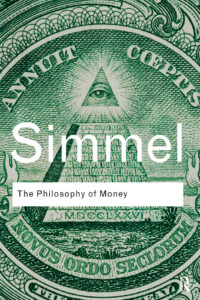
Among his most important works are The Philosophy of Money (1900), Sociology (1908), and the influential essay The Metropolis and Mental Life (1903). Simmel’s style, combining philosophical reflection with sociological insight, shaped later thinkers in fields such as symbolic interactionism, critical theory, and cultural sociology.
Today, Simmel is recognized as a key figure in understanding the complexities of modern social experience.
| Title | Metropolis and Mental Life Georg Simmel |
|---|---|
| Author | Georg Simmel |
| Publisher | Free Press |
| Date | 1950 |
| Pages | 12 |
| Country | United States of America |
| ISBN | none |
| Translation | Kurt H. Wolff |
| Format | |
| Filesize | 2.7 MB |
| URL | Georg Simmel Metropolis and Mental Life Georg Simmel pdf |