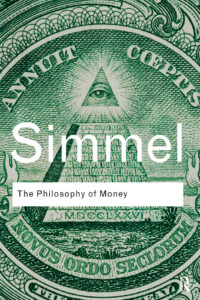
In The Philosophy of Money, Georg Simmel provides us with a now classic discussion of the social, psychological and philosophical aspects of the money economy, full of brilliant insights into the forms that social relationships take.
Publisher
Routledge and Kegan Paul Ltd
ISBN
9780415610117
Year
2011
Pages
582
Summary
The Philosophy of Money (1900) is one of Georg Simmel’s most influential and ambitious works, offering a profound analysis of money not merely as an economic instrument but as a central force shaping modern culture, social relations, and individual consciousness. Rather than treating money in technical or purely economic terms, Simmel approaches it philosophically, examining how monetary exchange transforms values, social bonds, and forms of life.
A central argument of the book is that money functions as a universal mediator. By enabling comparison between otherwise incomparable objects, money promotes abstraction and calculation, gradually replacing personal, qualitative relations with impersonal, quantitative ones. This process, Simmel argues, contributes to the rationalization of modern society, increasing efficiency and freedom while simultaneously generating feelings of distance, indifference, and alienation.
Simmel also explores the paradoxical relationship between money and individual freedom. On one hand, monetary economies liberate individuals from traditional dependencies by allowing them to pursue diverse goals and lifestyles. On the other hand, the dominance of money can subordinate personal values to economic logic, encouraging a culture in which worth is measured primarily in financial terms.
Another major theme is the impact of money on culture and personality. Simmel connects monetary exchange to the rise of modern urban life, characterized by intellectualization, emotional restraint, and a blasé attitude toward experience. He suggests that while money expands possibilities, it also risks flattening meaning by reducing rich qualitative differences to numerical equivalence.
Overall, The Philosophy of Money remains a foundational text in sociological and cultural theory. Its enduring significance lies in its ability to illuminate how economic forms shape not only institutions but also everyday life, identity, and the deepest patterns of modern existence.
Contents
The Philosophy of Money
Preface
Analytical Part
1. Value and Money
2. The Value of Money as a Substance
3. Money in the Sequence of Purposes
Synthetic Part
4. Individual Freedom
5. The Money Equivalent of Personal Values
6. The Style of Life
Extract
Does money possess an intrinsic value?
The preceding argument has not yet touched upon the question of whether money, in reality, has value or not. It was intended only to show that the function of money in measuring values does not necessarily impose upon it the character of being itself a valuable object. However, the mere possibility that money does possess value opens the way to understanding not only the historical development of money but, above all, its essential nature.
In the primitive stages of the economy, use-values often appear as money: cattle, salt, slaves, tobacco, hides, and similar objects. Whatever the path by which money has evolved, in the beginning it must have been something experienced as valuable in itself. It becomes possible to exchange the most valuable things for a printed form only when the chain of purposes is extensive and reliable, and when it guarantees that what is immediately valueless will nevertheless help us to acquire other values.
In this manner, one can carry out a series of logical deductions, even through seemingly impossible or contradictory stages, to reach a valid and binding conclusion—but only when the process of thought is assured of its direction and its correctness.
Author
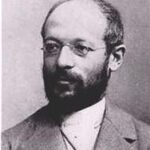
Georg Simmel (1858–1918) was a German sociologist, philosopher, and cultural theorist whose work played a decisive role in shaping classical sociological thought. Born in Berlin, Simmel studied history and philosophy at the University of Berlin, where he later became a lecturer.
Simmel’s scholarship is distinguished by its focus on the forms of social interaction rather than on large-scale social structures alone. He explored everyday phenomena such as fashion, secrecy, conflict, money, and urban life, demonstrating how seemingly minor social processes reveal fundamental patterns of modern society. His essay The Metropolis and Mental Life and his major book The Philosophy of Money remain cornerstones of sociological and cultural analysis.