From Max Weber: Essays in Sociology, edited by Gerth and Mills, brings together Weber’s core writings on power, bureaucracy, stratification, and religion. It presents his key concepts—including class, status, and party, charismatic authority, and the monopoly on violence—framing the modern world’s relentless rationalization and “disenchantment.”
Publisher
Oxford University Press
ISBN
9780195004625
Year
1967
Pages
508
Summary
From Max Weber: Essays in Sociology, translated and edited by H. H. Gerth and C. Wright Mills, is a landmark anthology that introduced Max Weber’s foundational social theory to the English-speaking world. The volume systematically gathers Weber’s crucial writings on power, bureaucracy, social stratification, and religion, organized around his central theme: the relentless rationalization and “disenchantment” of modern Western society.
The collection opens with Gerth and Mills’s seminal intellectual introduction, followed by Weber’s classic speeches, “Politics as a Vocation” and “Science as a Vocation.” In these essays, Weber defines the state by its monopoly on legitimate physical violence, contrasts charismatic leadership with bureaucratic administration, and analyzes the distinct ethical responsibilities of scholars and politicians operating in a disillusioning, hyper-specialized world.
A key contribution of the volume is Weber’s multidimensional model of social stratification. Moving beyond pure economics, he demonstrates how power is distributed through class (economic market situation), status (social honor and prestige), and party (political power). Coupled with this is his famous analysis of bureaucracy—an indispensable, highly efficient, yet dehumanizing system of administrative domination that locks modern individuals into an “iron cage.” He contrasts this rigid order with the disruptive potential of charismatic authority.
Finally, the religious essays explore how belief systems interact with economic life. Weber examines the social psychology of world religions, the Protestant ethic’s role in fostering modern capitalism, and the distinct institutional frameworks of the Indian caste system and the Chinese Confucian literati. Ultimately, the collection highlights Weber’s master insight: that ideas and material interests jointly shape human history, leaving a profound impact on contemporary sociology.
Contents
INTRODUCTION: THE MAN AND HIS WORK
I. A Biographical View
II. Political Concerns
III. Intellectual Orientations
1. Marx and Weber
2. Bureaucracy and Charisma: A Philosophy of History
3. Methods of Social Science
4. The Sociology of Ideas and Interests
5. Social Structures and Types of Capitalism
6. Conditions of Freedom and the Image of Man
Part I: SCIENCE AND POLITICS
IV. Politics as a Vocation
V. Science as a Vocation
Part II: POWER
VI. Structures of Power
1. The Prestige and Power of the 'Great Powers'
2. The Economic Foundations of 'Imperialism'
3. The Nation
VII. Class, Status, Party
1. Economically Determined Power and the Social Order
2. Determination of Class-Situation by Market-Situation
3. Communal Action Flowing from Class Interest
4. Types of 'Class Struggle'
5. Status Honor
6. Guarantees of Status Stratification
7. 'Ethnic' Segregation and 'Caste'
8. Status Privileges
9. Economic Conditions and Effects of Status Stratification
10. Parties
VIII. Bureaucracy
1. Characteristics of Bureaucracy
2. The Position of the Official
3. The Presuppositions and Causes of Bureaucracy
4. The Quantitative Development of Administrative Tasks
5. Qualitative Changes of Administrative Tasks
6. Technical Advantages of Bureaucratic Organization
7. Bureaucracy and Law
8. The Concentration of the Means of Administration
9. The Leveling of Social Differences
10. The Permanent Character of the Bureaucratic Machine
11. Economic and Social Consequences of Bureaucracy
12. The Power Position of Bureaucracy
13. Stages in the Development of Bureaucracy
14. The 'Rationalization' of Education and Training
IX. The Sociology of Charismatic Authority
1. The General Character of Charisma
2. Foundations and Instability of Charismatic Authority
3. Charismatic Kingship
X. The Meaning of Discipline
1. The Origins of Discipline in War
2. The Discipline of Large-Scale Economic Organizations
3. Discipline and Charisma
Part III: RELIGION
XI. The Social Psychology of the World Religions
XII. The Protestant Sects and the Spirit of Capitalism
XIII. Religious Rejections of the World and Their Directions
1. Motives for the Rejection of the World: The Meaning of Their Rational Construction
2. Typology of Asceticism and of Mysticism
3. Directions of the Abnegation of the World
4. The Economic Sphere
5. The Political Sphere
6. The Esthetic Sphere
7. The Erotic Sphere
8. The Intellectual Sphere
9. The Three Forms of Theodicy
Part IV: SOCIAL STRUCTURES
XIV. Capitalism and Rural Society in Germany
XV. National Character and the Junkers
XVI. India: The Brahman and the Castes
1. Caste and Tribe
2. Caste and Guild
3. Caste and Status Group
4. The Social Rank Order of the Castes in General
5. Castes and Traditionalism
XVII. The Chinese Literati
1. Confucius
2. The Development of the Examination System
3. The Typological Position of Confucian Education
4. The Status-Honor of the Literati
5. The Gentleman Ideal
6. The Prestige of Officialdom
7. Views on Economic Policy
8. Sultanism and the Eunuchs as Political Opponents of the Literati
Extract
This lecture, which I give at your request, will necessarily disappoint you in a number of ways. You will naturally expect me to take a position on actual problems of the day. But that will be the case only in a purely formal way and toward the end, when I shall raise certain questions concerning the significance of political action in the whole way of life. In today’s lecture, all questions that refer to what policy and what content one should give one’s political activity must be eliminated. For such questions have nothing to do with the general question of what politics as a vocation means and what it can mean. Now to our subject matter.
What do we understand by politics? The concept is extremely broad and comprises any kind of independent leadership in action. One speaks of the currency policy of the banks, of the discounting policy of the Reichsbank, of the strike policy of a trade union; one may speak of the educational policy of a municipality or a township, of the policy of the president of a voluntary association, and, finally, even of the policy of a prudent wife who seeks to guide her husband. Tonight, our reflections are, of course, not based upon such a broad concept. We wish to understand by politics only the leadership, or the influencing of the leadership, of a political association, hence today, of a state.
But what is a ‘political’ association from the sociological point of view? What is a ‘state’? Sociologically, the state cannot be defined in terms of its ends. There is scarcely any task that some political association has not taken in hand, and there is no task that one could say has always been exclusive and peculiar to those associations which are designated as political ones: today the state, or historically, those associations which have been the predecessors of the modern state.
Author
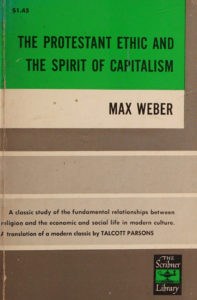
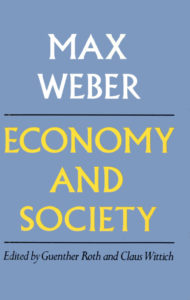
Max Weber (1864–1920) was a pioneering German sociologist, political economist, and philosopher whose ideas profoundly shaped modern social science. Renowned for analyzing rationalization, bureaucracy, and capitalism, Weber rejected economic determinism in favor of multidimensional social analysis. His landmark works include The Protestant Ethic and the Spirit of Capitalism, which linked religious ethics to economic systems, and his posthumously published magnum opus, Economy and Society. Other major contributions include seminal essays such as Politics as a Vocation, Science as a Vocation, and The Religion of China, cementing his legacy as a foundational figure in sociological theory.